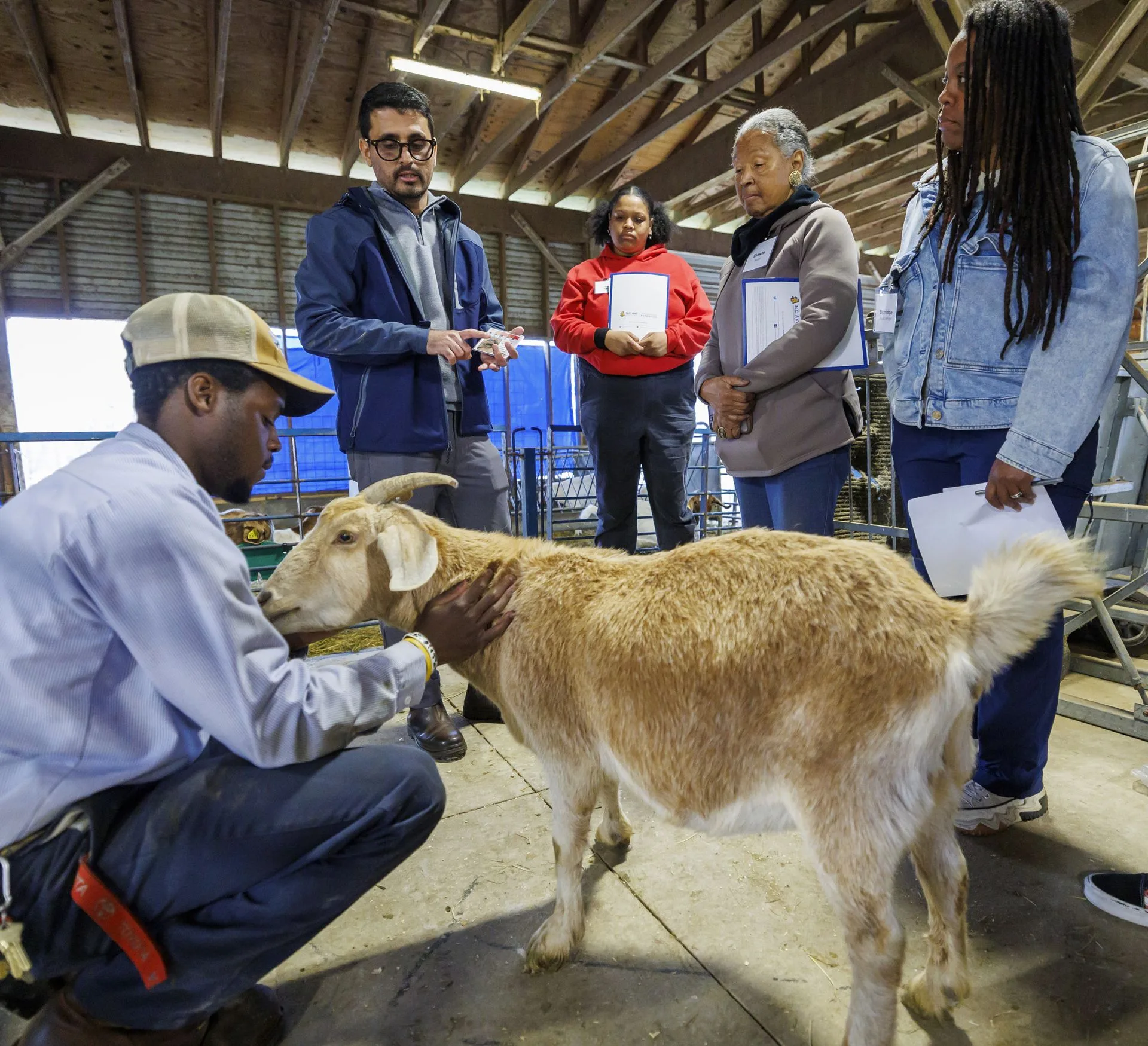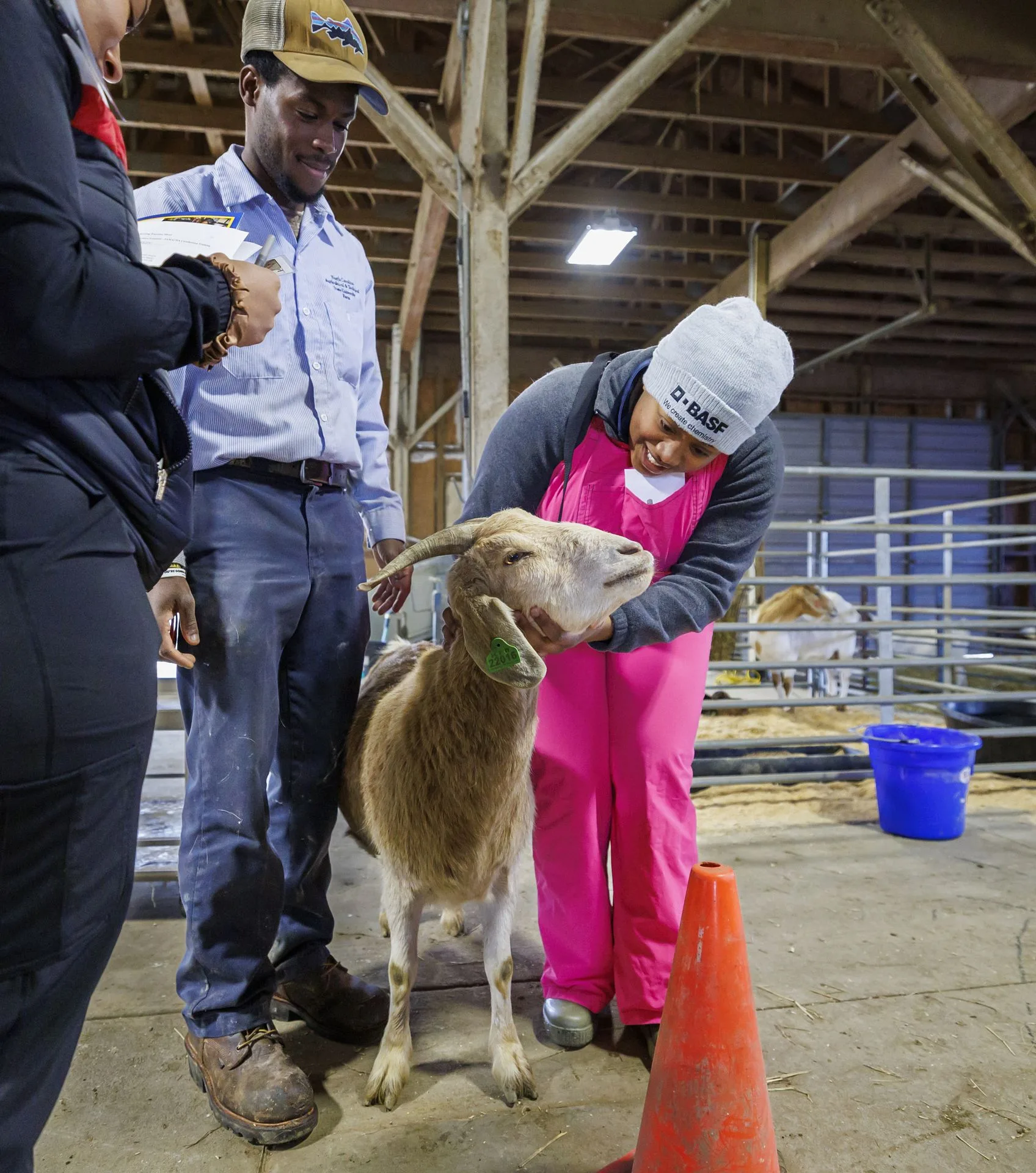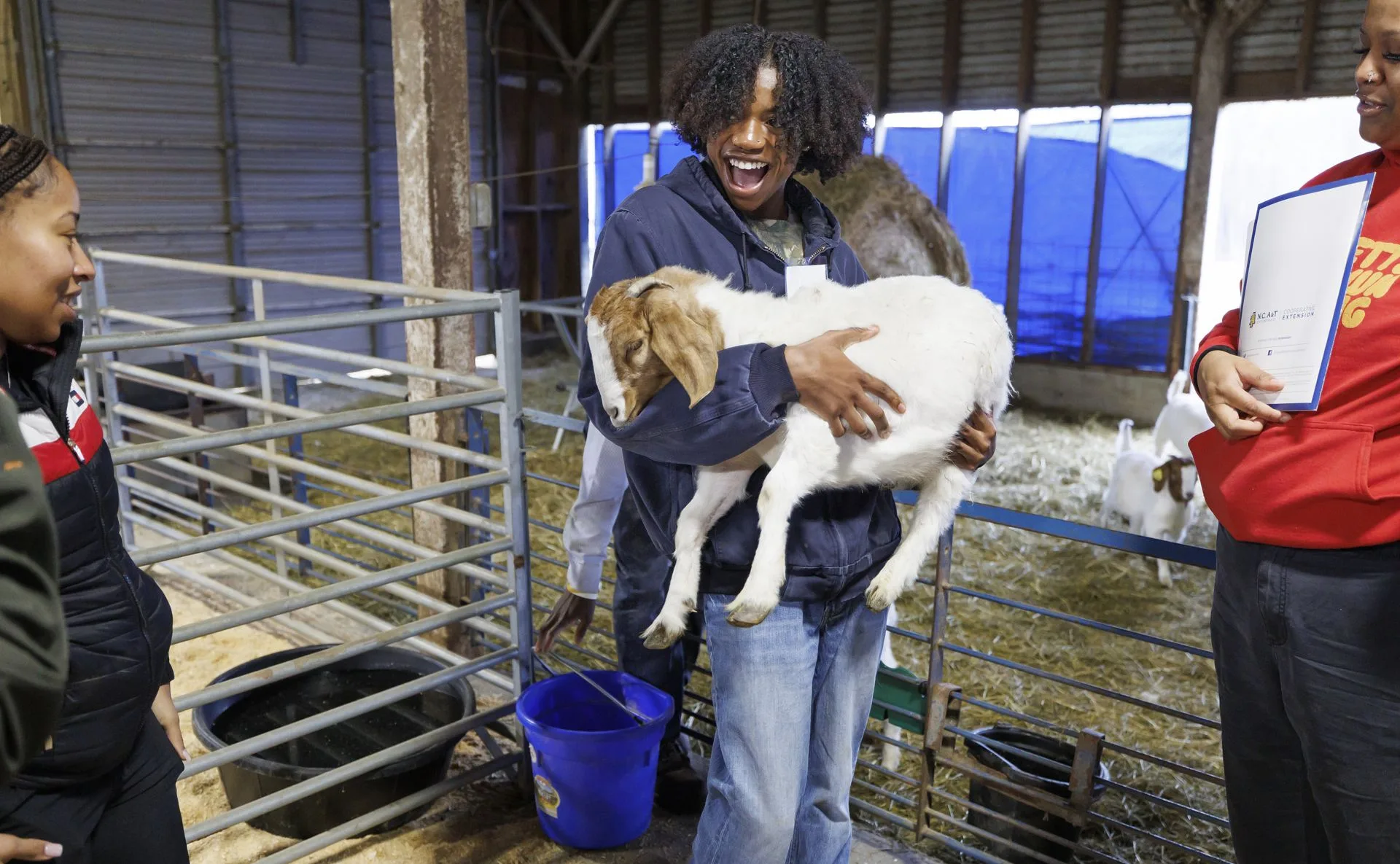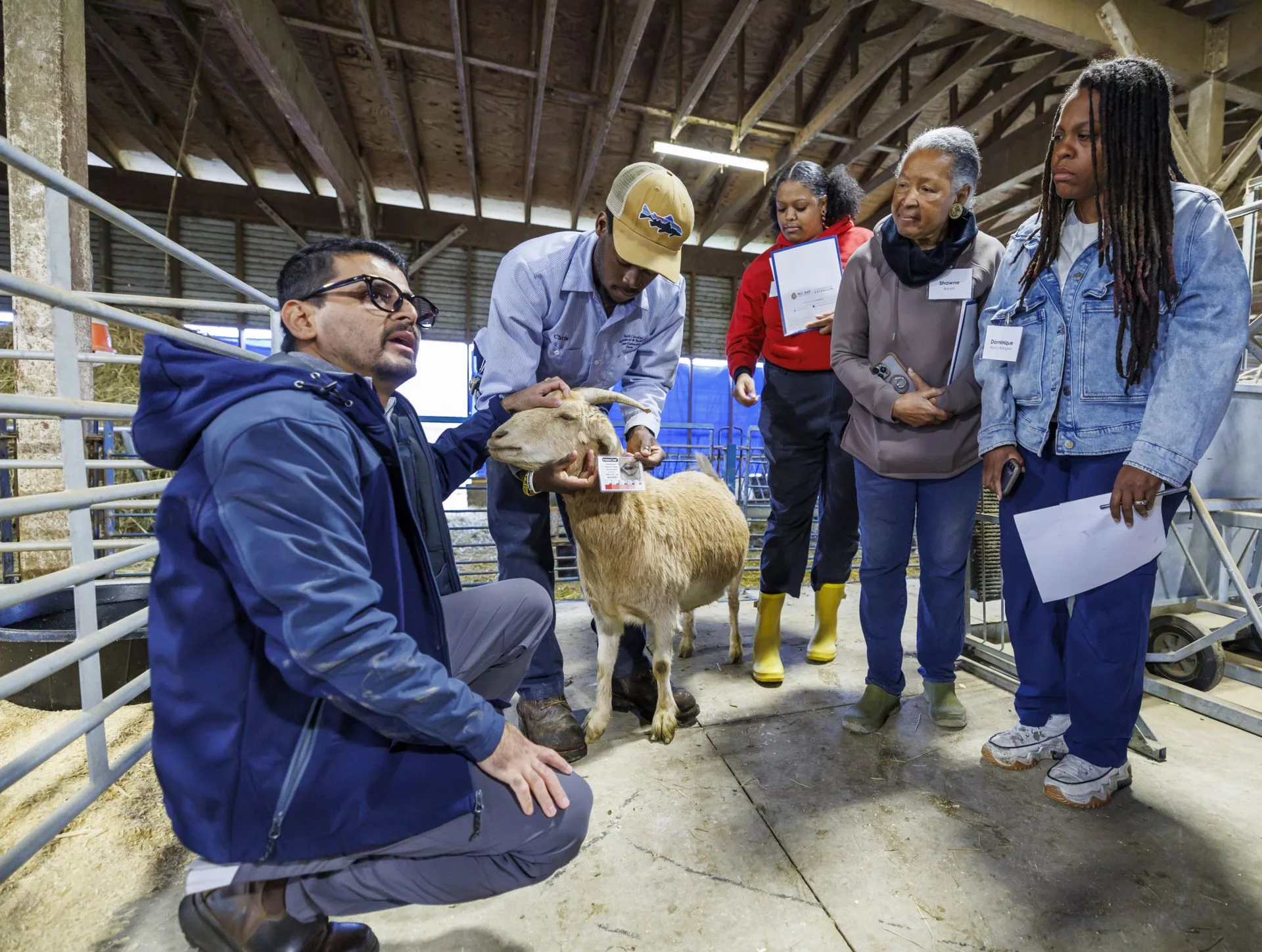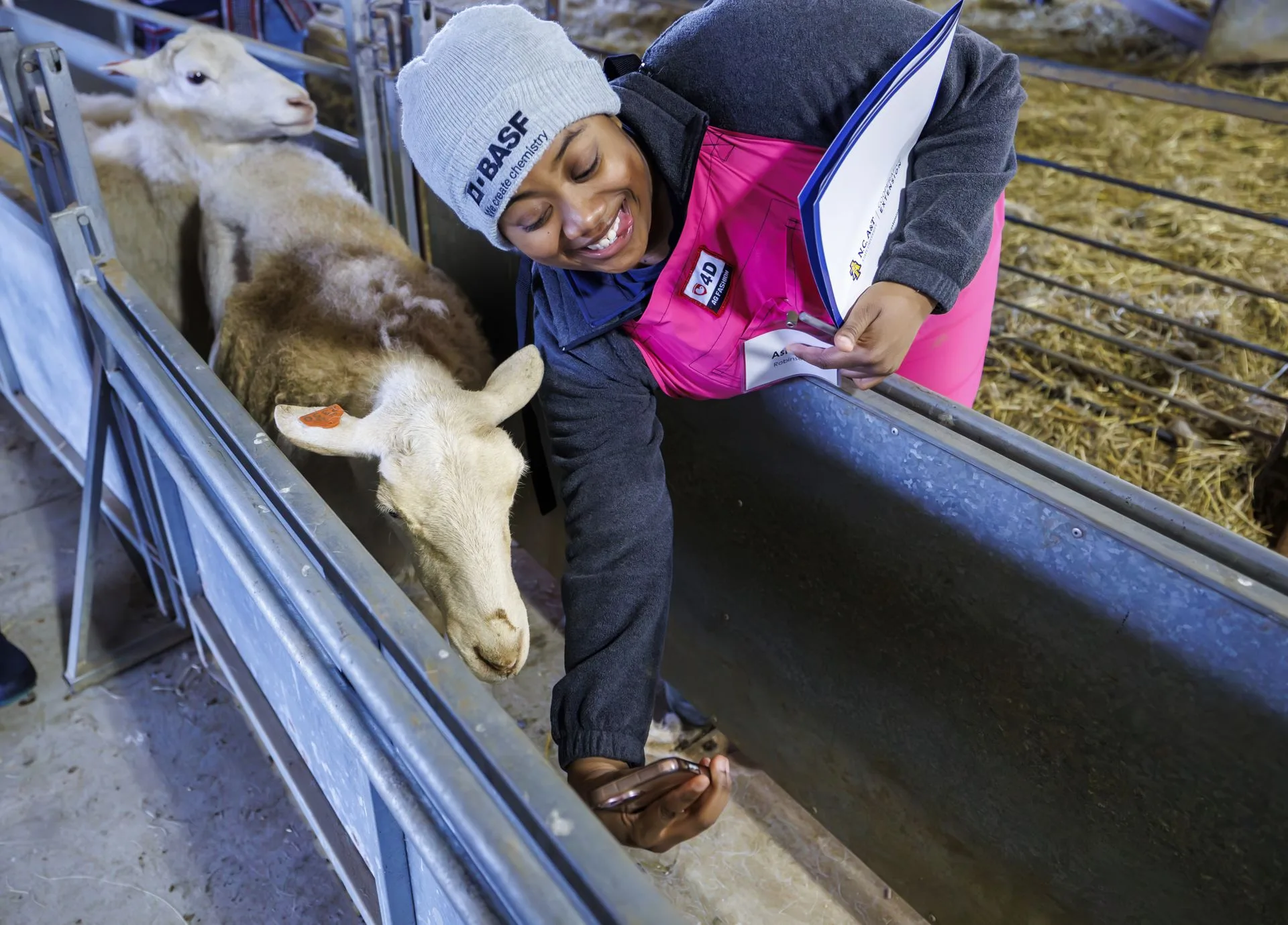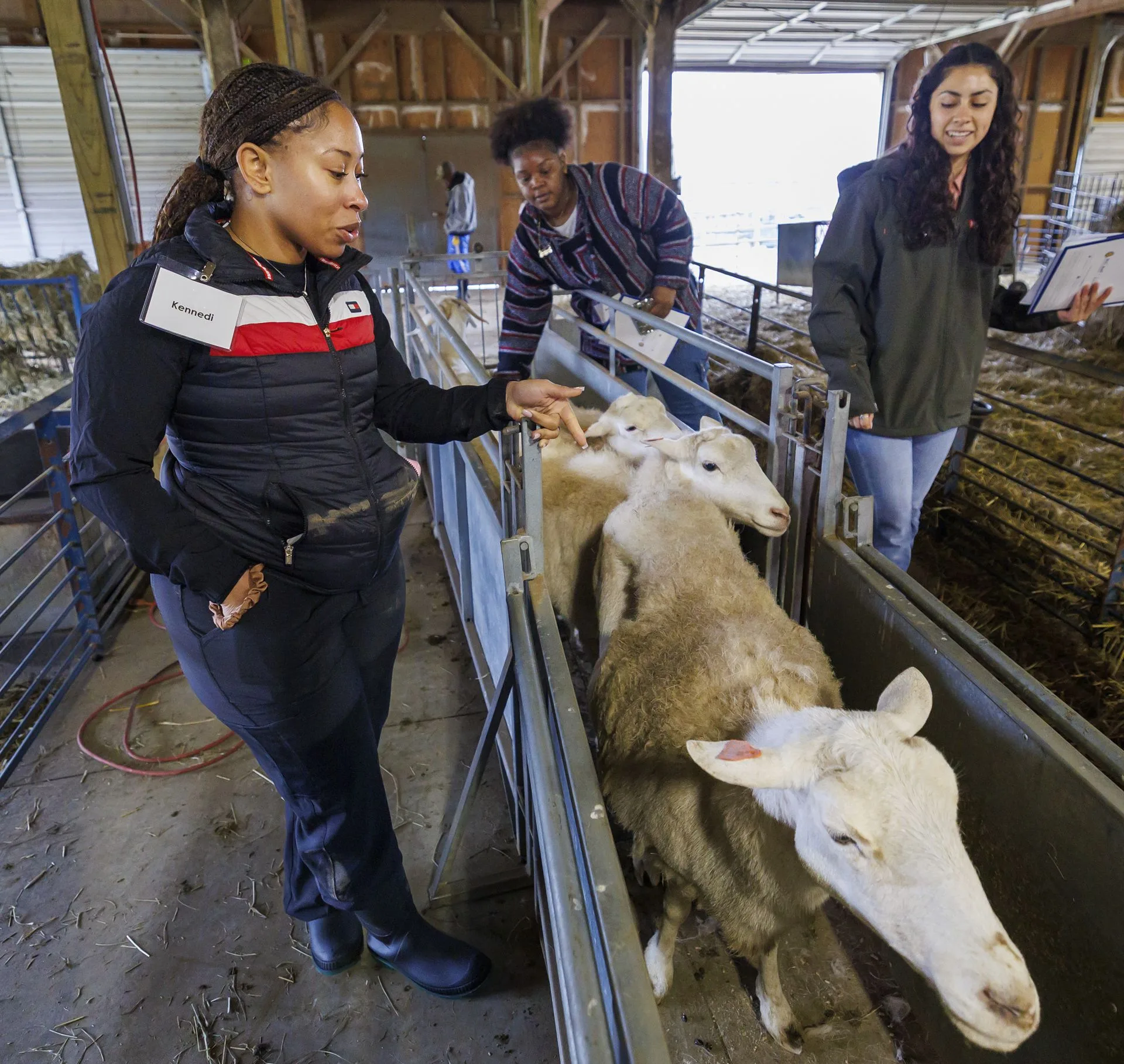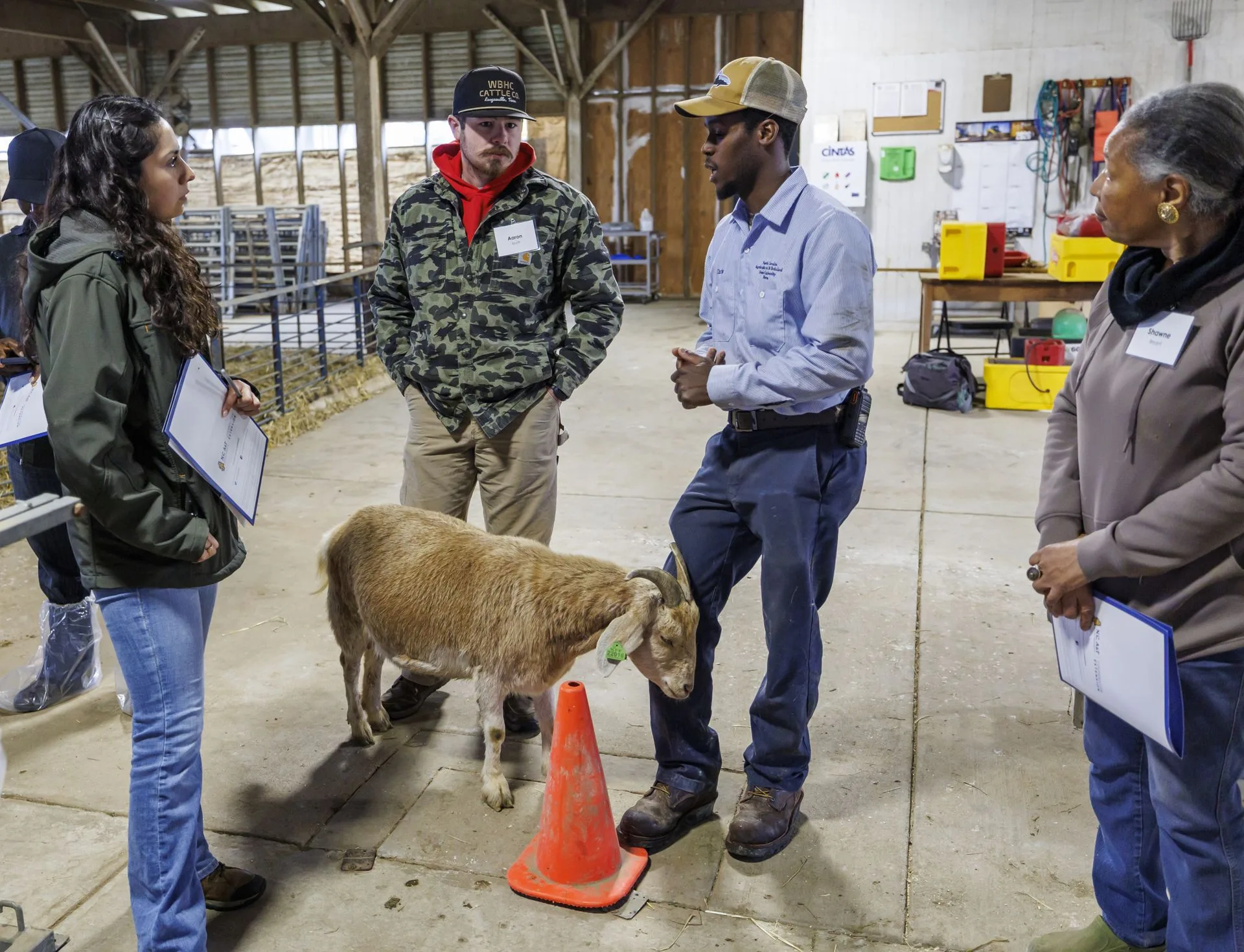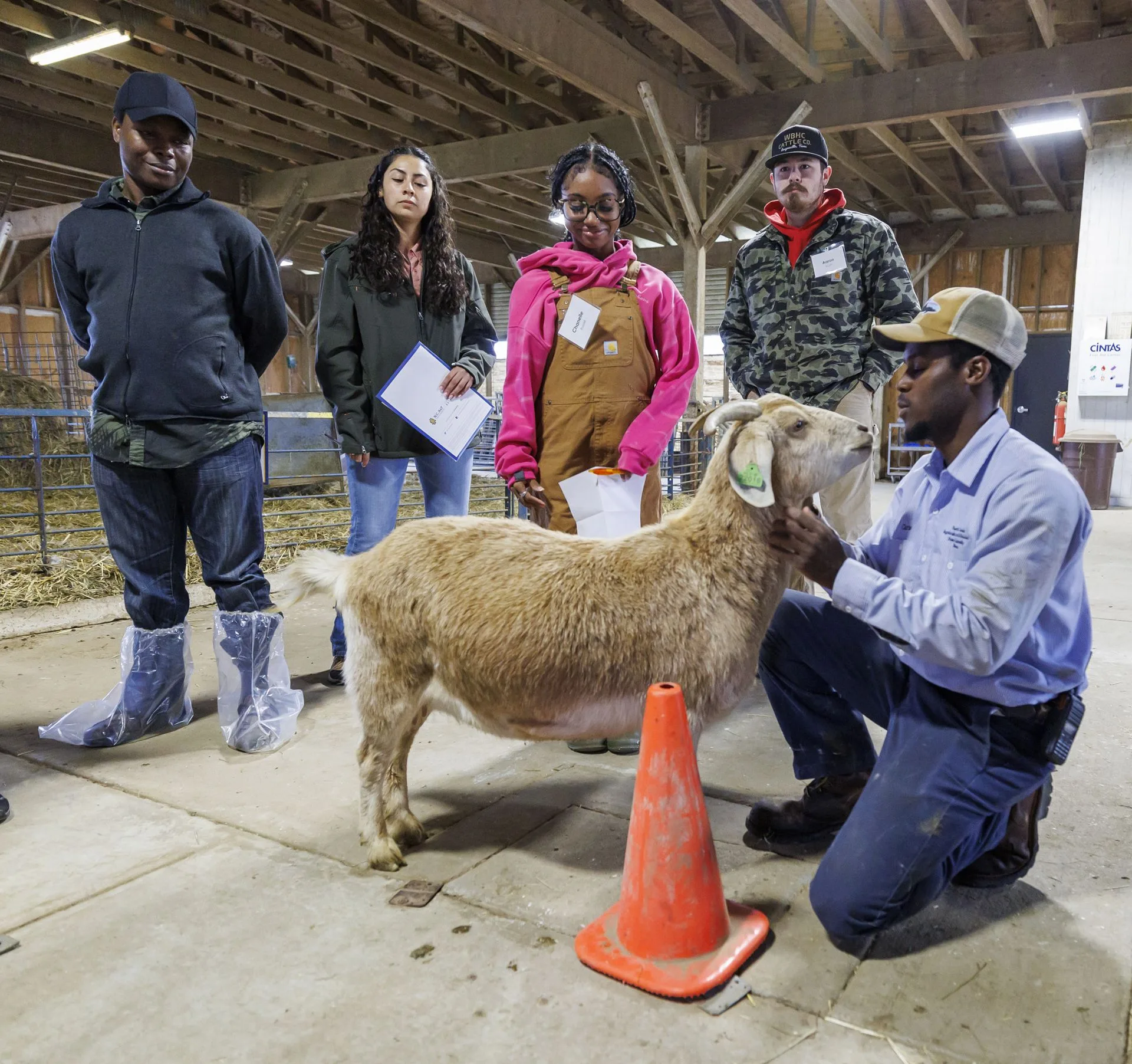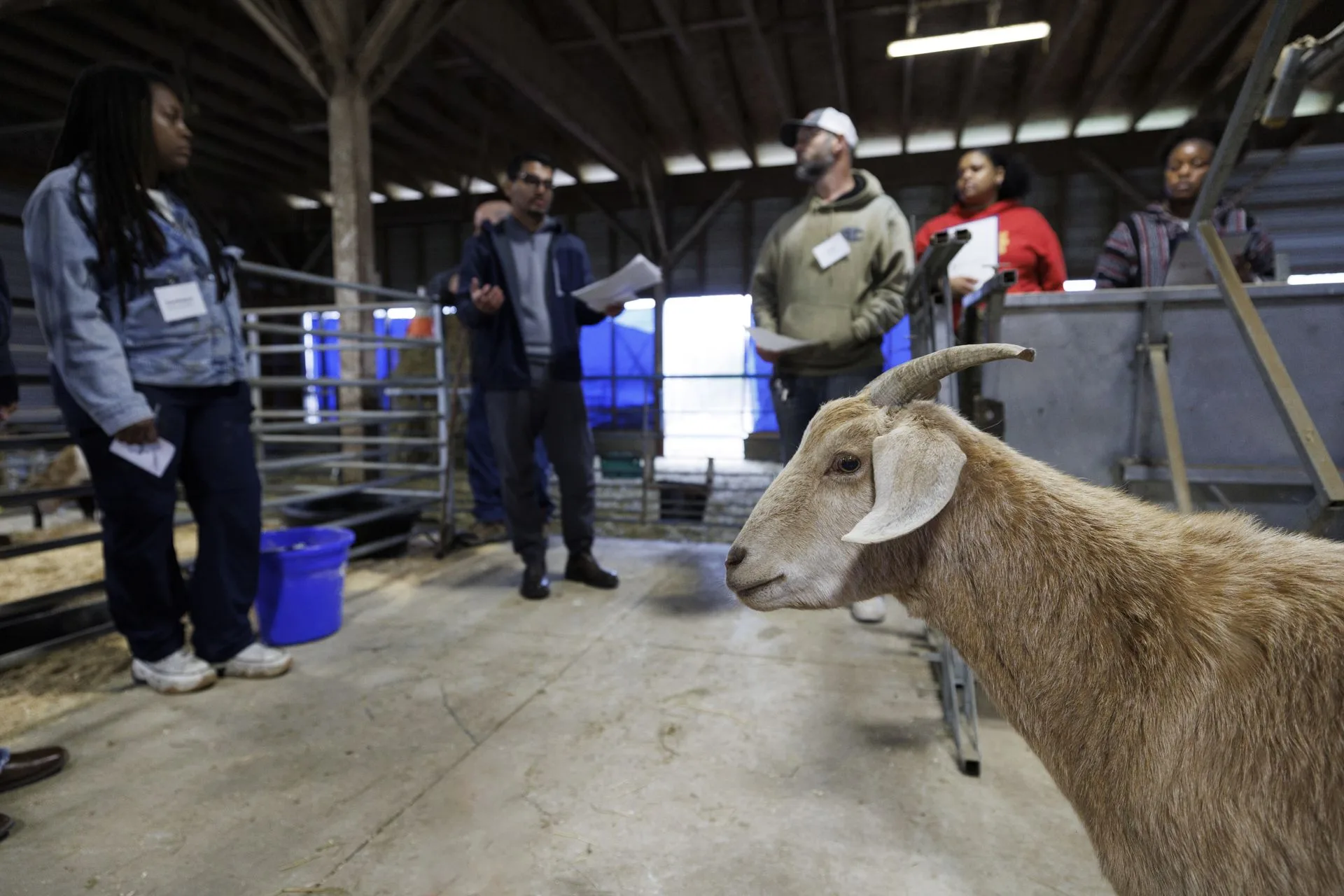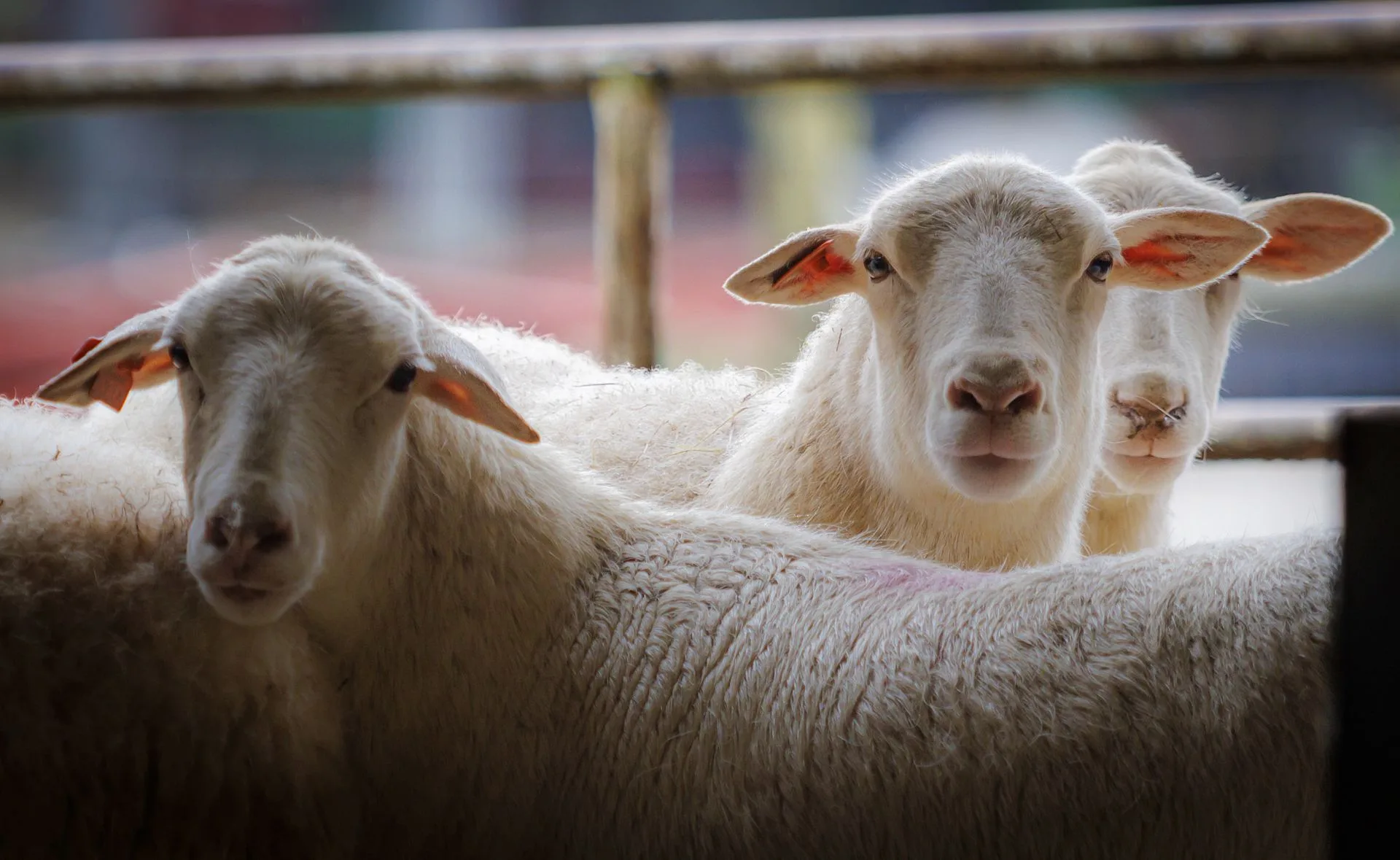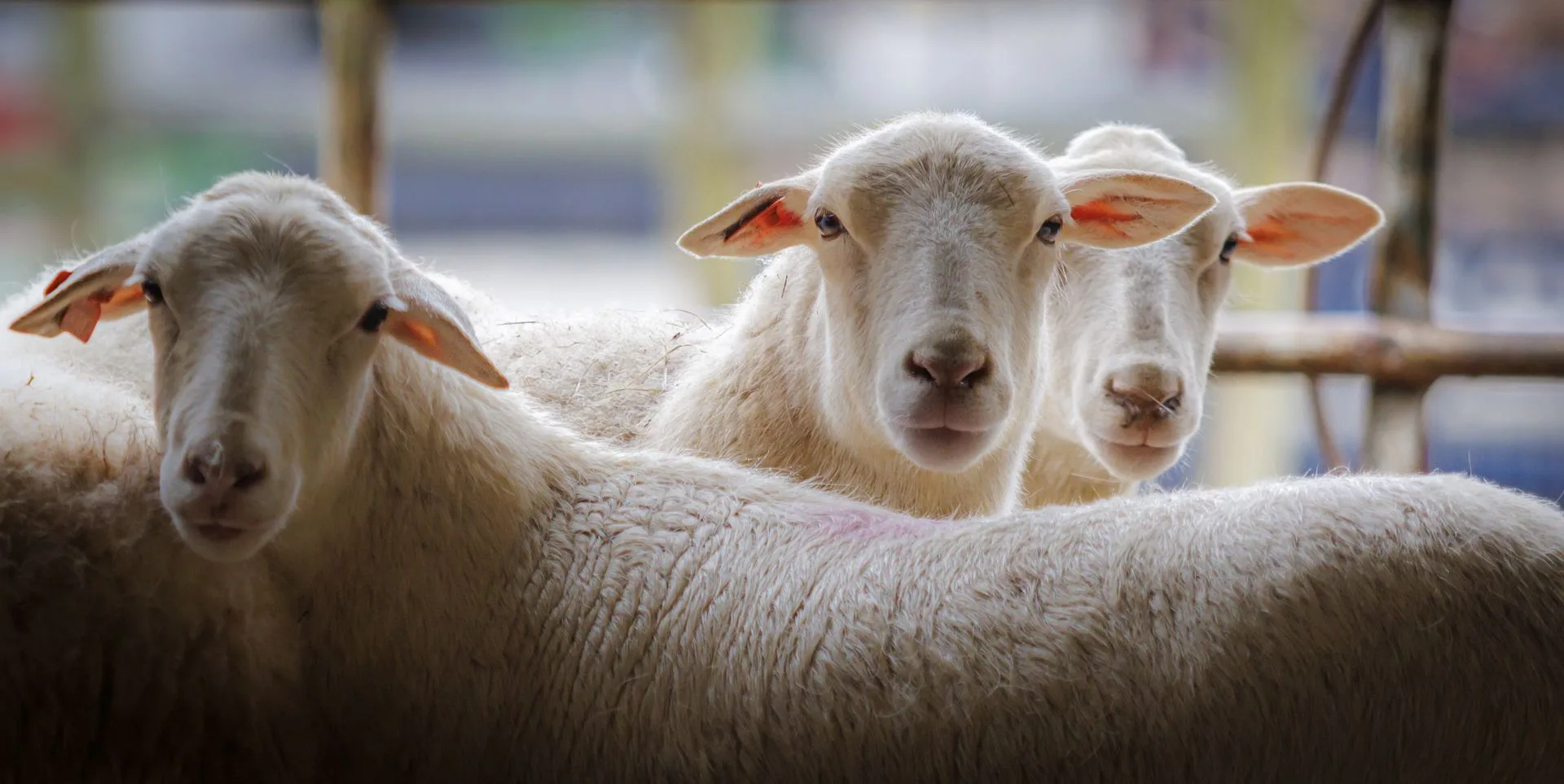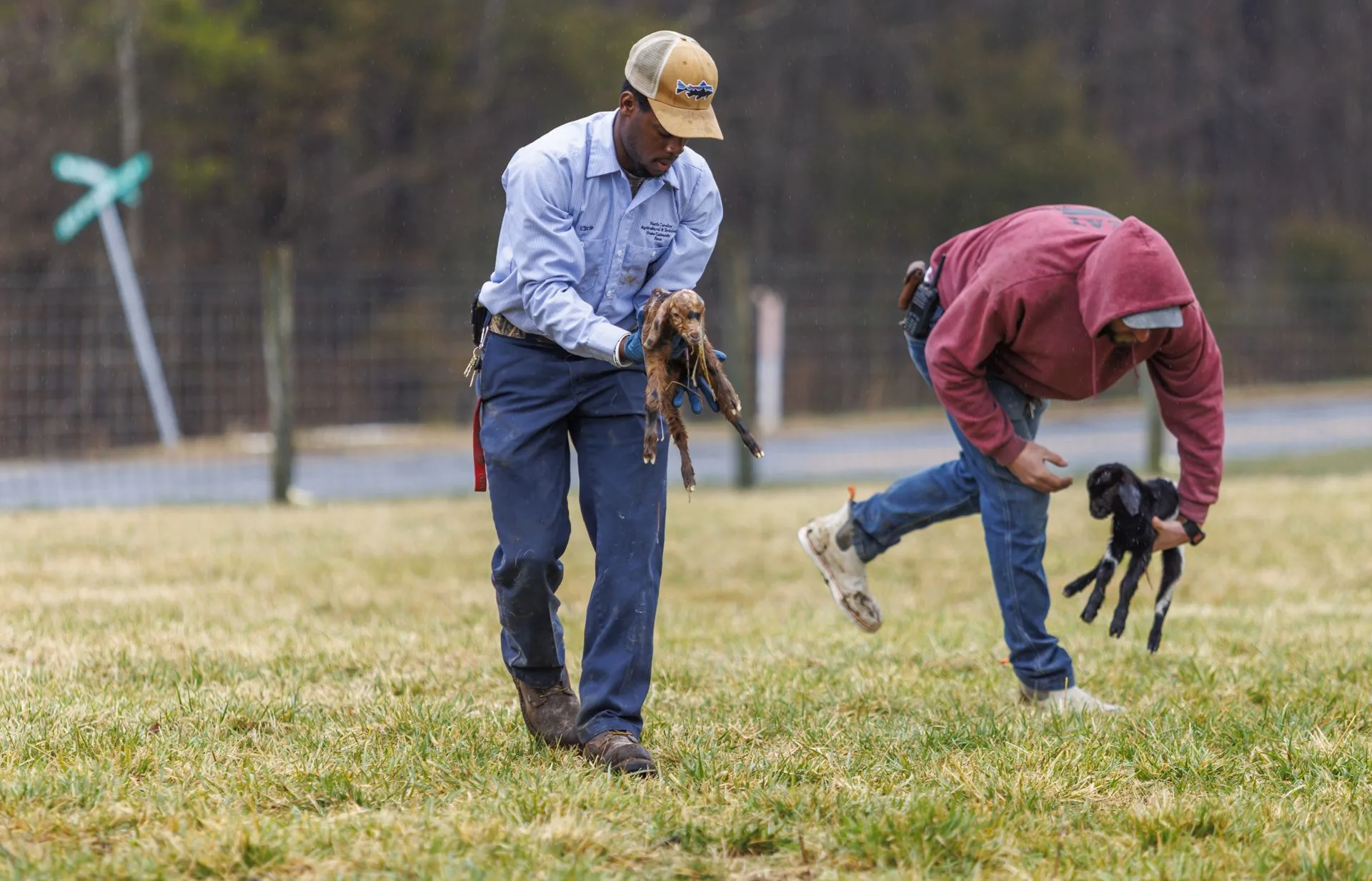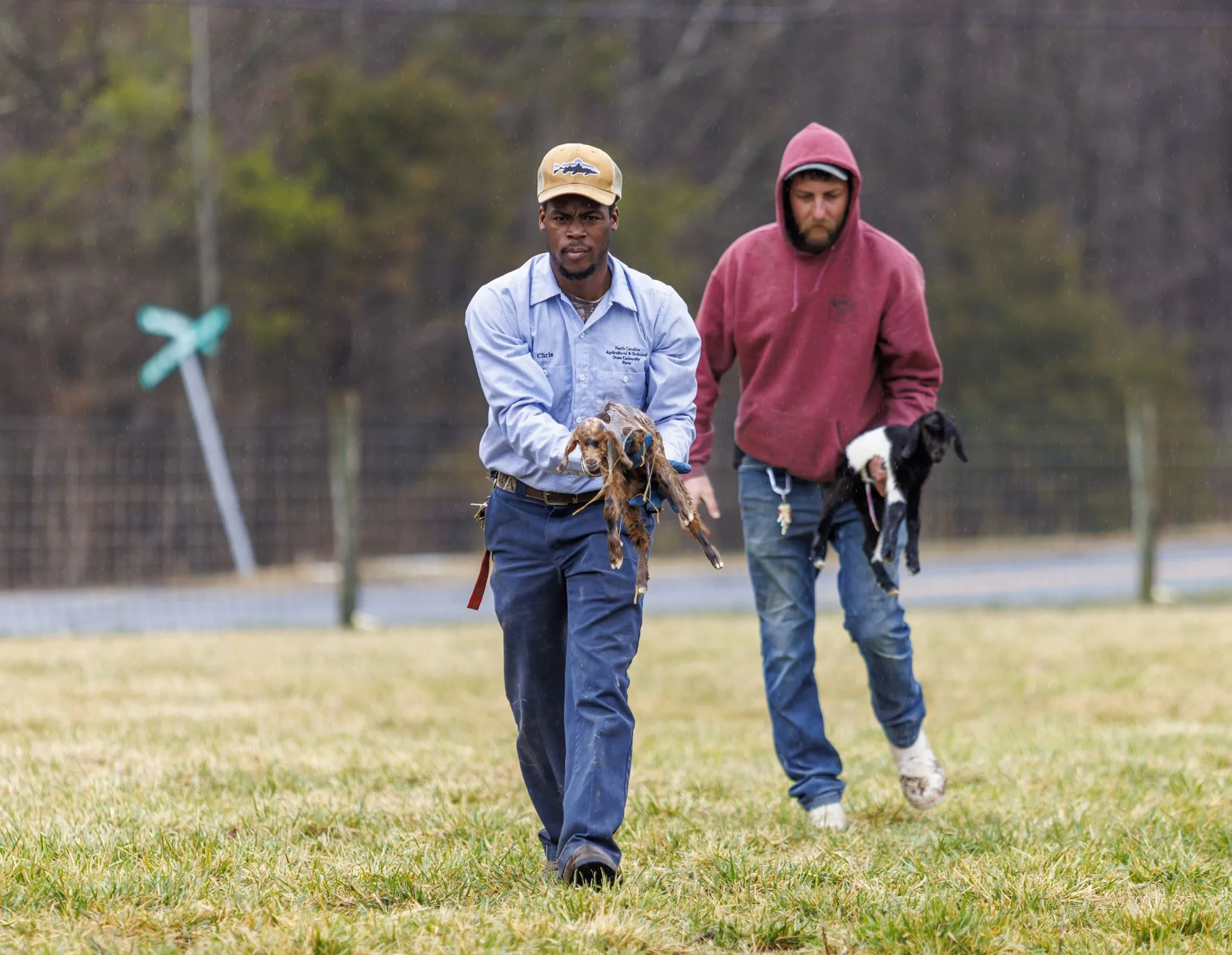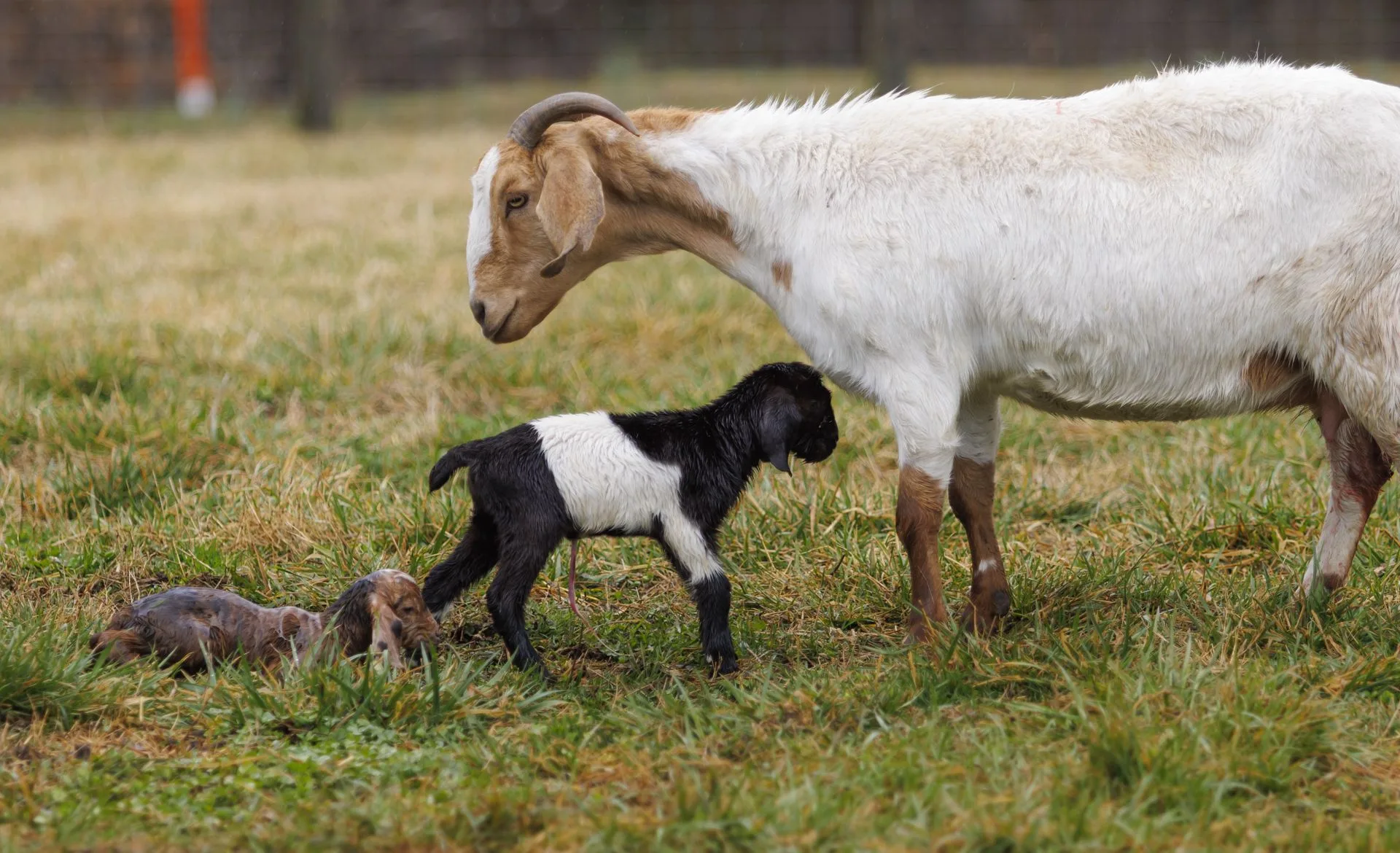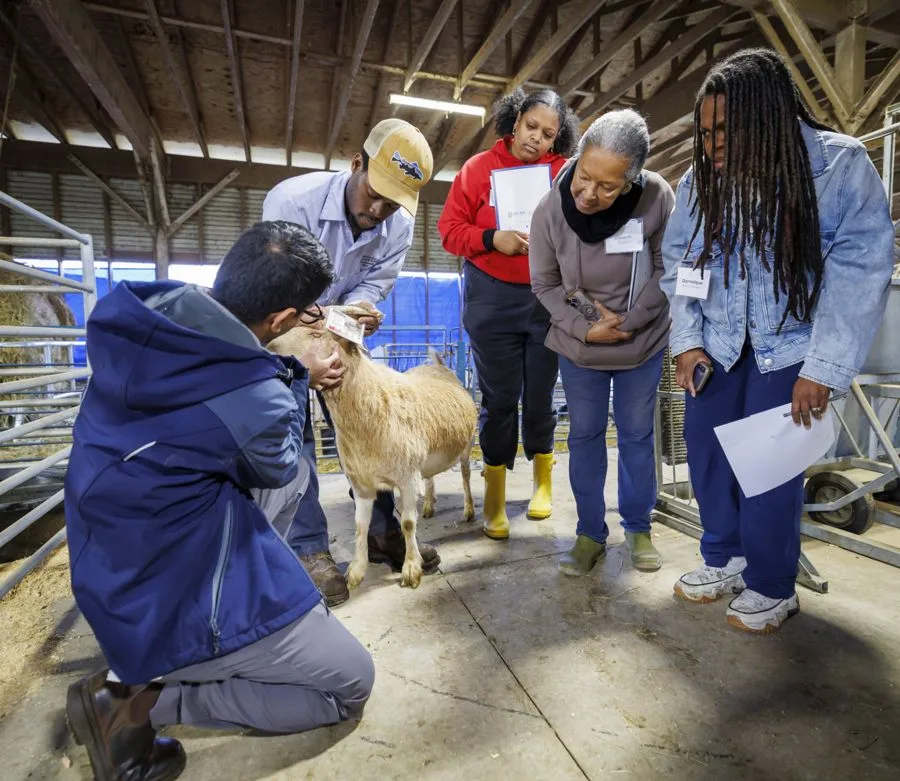
N.C. A&T Cooperative Extension hosted a small ruminant training course at the University Farm this spring, inviting guests to learn about five-point animal assessment and earning their FAMACHA certification. Led by Sanjok Poudel, Ph.D., assistant professor and Extension animal specialist, a group of 20 ruminant enthusiasts and students took part in assessing the health of the farm’s sheep and goats.
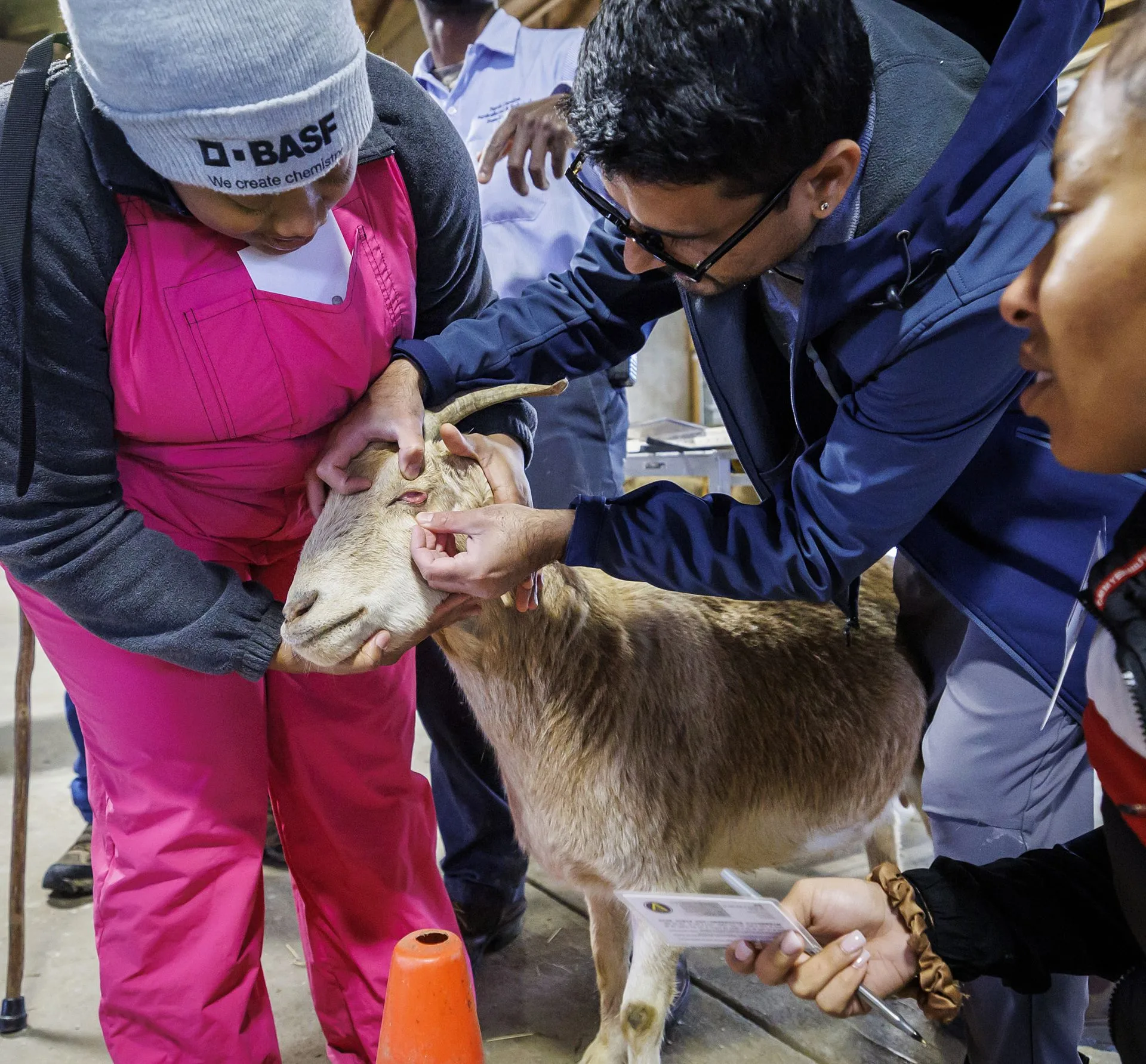
“Each of you will receive a FAMACHA card and will be scoring two animals,” Poudel told the group. “Your exercise will tell you based on your score whether to treat the animals, wait & watch and look for the symptoms, or not treat the animals.”
FAMACHA scores are a diagnostic tool used to assess the risk of anemia in goats, sheep, and other small ruminants. Using a “cover, push, pull, pop” method, Poudel explained how pulling down on the animal’s eyelid, revealing the eye’s mucus membrane, and comparing its shade of color to the score on the FAMACHA card would help determine if it had anemia.
“The darker the shade is on your FAMACHA card, the less likely the animal is of being anemic,” Poudel explained. “This rarely happens, but if you have two eyes that are different numbers, one is a 2 and another is a 3, then you should go with the higher number.”
Gallery